Juku & ZX Spectrum
First programs on a school Juku computer and experiments on a friend’s ZX Spectrum. This is where programming stopped being just something computers “do” and became something I could shape myself.
I’ve been fascinated by computers, systems and building solutions since the early days of school computers. Life took me into another profession, but the urge to invent, solve problems and make useful things never really left.
I wrote some of my first programs on a Juku school computer. I also got access to a friend’s ZX Spectrum, and later I had my own early PC with a processor running at only a few MHz. Those machines were limited, but that limitation was part of the fun: you had to understand what the computer could do and then figure out how to make something happen with it.
I would have liked to study computing more seriously, but financially that wasn’t possible at the time. Life took me into another professional field, and computing remained a hobby — sometimes active, sometimes almost completely absent — but the interest in building solutions never disappeared.
What has always interested me most is not technology for its own sake. It is the act of inventing a solution: noticing that something is awkward, inefficient or missing, understanding why, and then creating a better way to do it.
That mindset followed me into my everyday work as well. Whether the problem is physical or digital, I tend to approach it the same way: look at the full system, find the weak point, fix the cause instead of the symptom, and make the result practical enough that people will actually use it.
Not a straight career path — more like a long loop back to the thing that was always interesting in the first place.
First programs on a school Juku computer and experiments on a friend’s ZX Spectrum. This is where programming stopped being just something computers “do” and became something I could shape myself.
My own early PC was slow by today’s standards, but it was mine. Over time it was followed by many different PCs, and technology became a permanent part of my life.
I was involved with the web-hosting company OwnHosting, where I handled technical support. It was one of the first periods when computers stopped feeling like a hobby and started feeling like work.
A major database problem forced everything to be restored manually. After spending so much time inside computers and infrastructure, the hobby feeling disappeared — and I stepped away from it for years.
Gaming pulled me back in. GTA V led to online friendships, which led to more time around computers again, and little by little the old technical curiosity returned.
One of the first serious systems I built after returning was a work-time tracking tool. Employees entered their hours and completed work by day, and reports could be generated directly from the system. It went into real use.
I then built a completely custom photo-bank system for construction projects. Site photos were sorted into the correct folders automatically, with different access levels for different users. The system is still in use and now handles tens of thousands of photos.
Small personal TikTok tools followed, including a Python-based TTS system. These were originally built only for my own use, but they opened the door to bigger product ideas.
Multipower explored multi-platform TTS, while the Word Game pushed further into live viewer interaction. This period turned small utilities into actual product thinking.
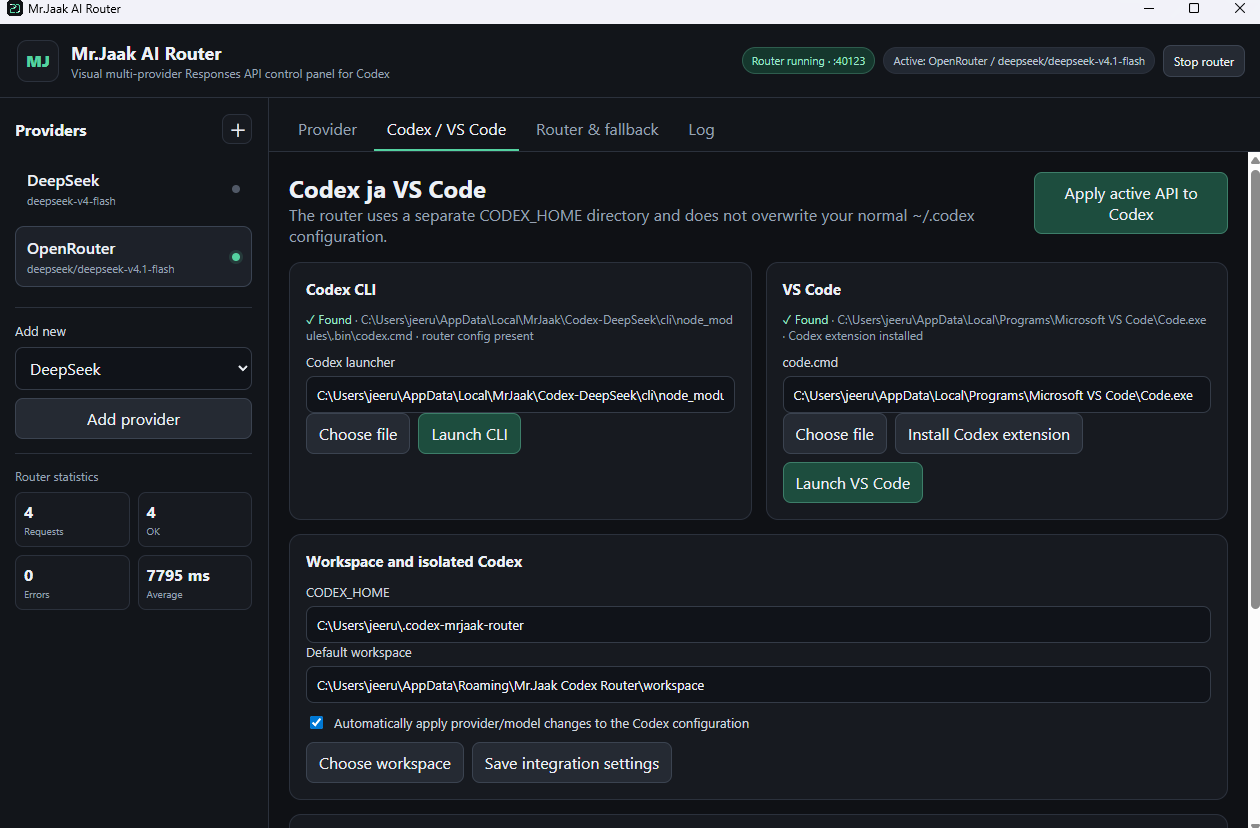
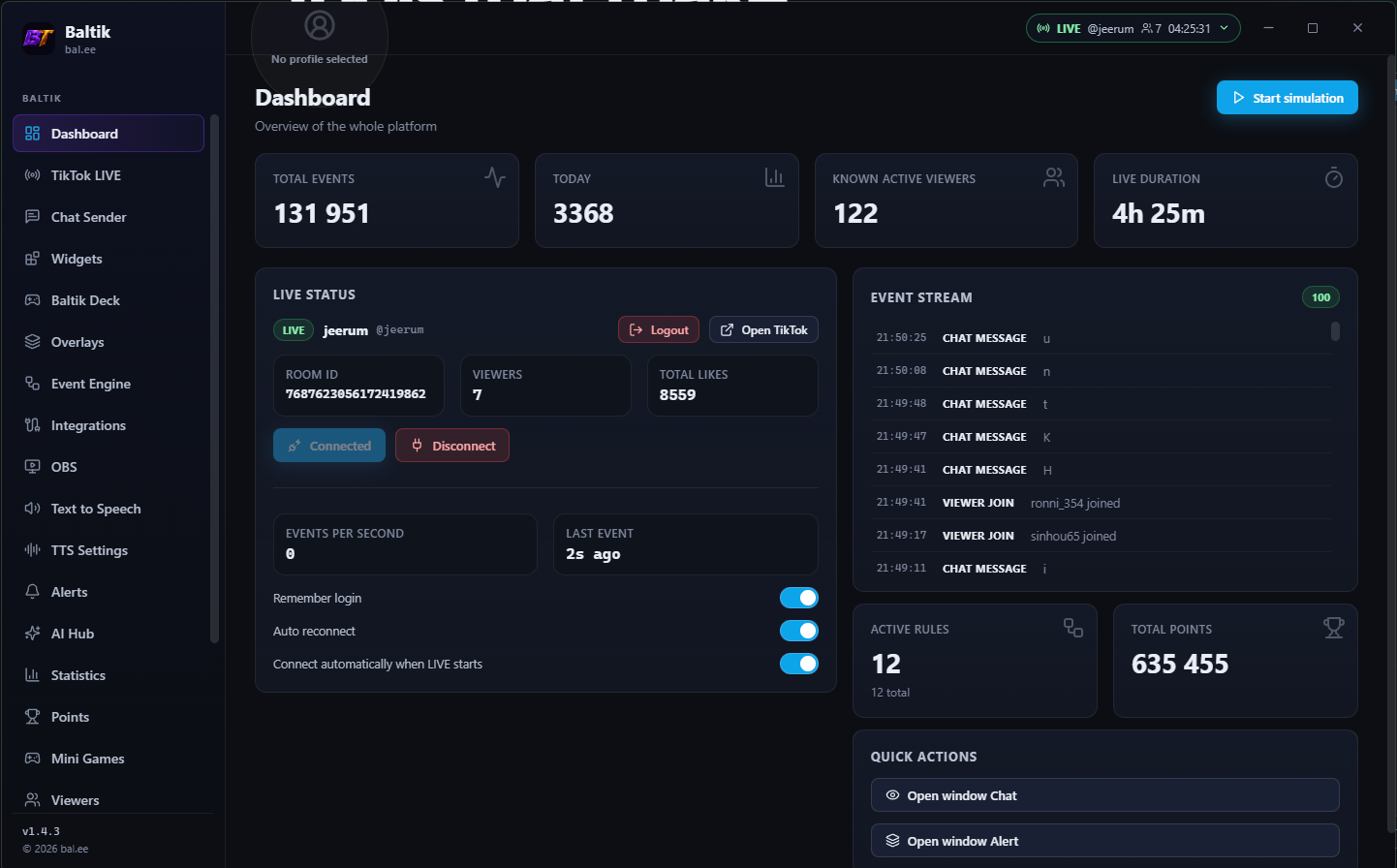
Baltik became the main project: a focused toolkit built specifically for TikTok LIVE creators, combining stream visibility, TTS, statistics, visual tools, interaction and extensibility in one place.
Baltik is built specifically for TikTok LIVE. The goal is simple: give creators more professional tools and more control over what happens during a live stream.
One of the original problems was very practical: streaming and gaming on a single monitor. Important notifications, overlays and stream information often disappear behind the game. Baltik can bring the overlay visibly on top, so the creator can actually see what is happening without needing a second screen.
From there the project grew into a broader toolkit — from statistics and visual presentation to deeply configurable TTS, viewer interaction and custom integrations.
Baltik is the main product. Smaller experiments, prototypes and unusual ideas live under FCK Labs.
A professional toolkit for TikTok LIVE creators — one-monitor overlays, TTS, statistics, visuals, Stream Deck actions, viewer interaction and extensibility.
Experimental products, prototypes and side ideas. The place for things that start with “what if we tried this?”
My gaming taste has changed a lot over the years — from sports and strategy to online worlds and tactical shooters.
Older favourites included FIFA, Formula and WRC games, simulators and strategy titles. Red Alert and Warcraft were exactly the kind of games that could make an evening disappear.
I spent years in GTA V, and it eventually became more than a game — it was also the route back into computers and online communities after years away from tech.
Then came a serious Fortnite phase. When that finally faded, ARC Raiders took over much of my gaming time. I also jump into Arena Breakout now and then when I want something more tactical.
I’ve owned every Sony PlayStation generation and used to be much more interested in consoles, but these days I’m mainly a PC player.
I build software, experiments and tools independently, and a lot of that work is made available for free. If something I’ve built is useful to you, a donation helps cover servers, development costs and gives the next idea a better chance of becoming real.